
A Familiar Stranger in the Café
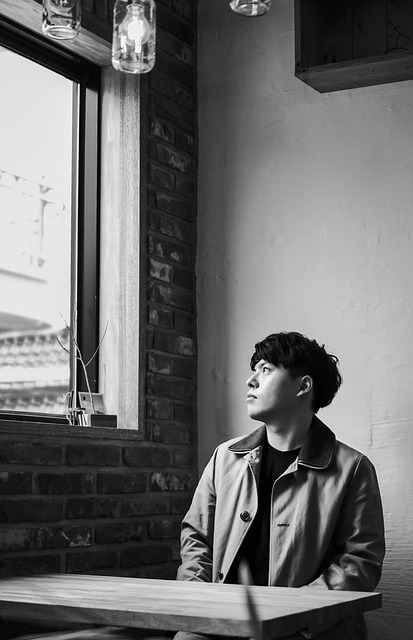
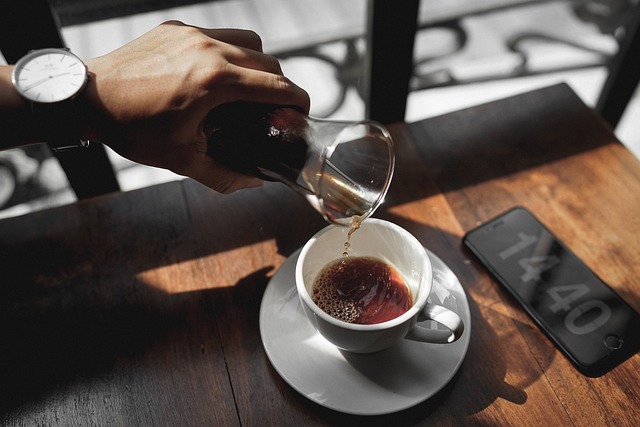
Philip sat in the far corner of a dimly lit café, staring into the swirl of steam rising from his coffee. The familiar scent should have comforted him, yet today, something felt off. Every Thursday, he came here, sat in the same booth, drank the same coffee—but for the first time, he couldn’t remember why.
Rain pelted the windows in rhythmic taps, blending with the murmurs of people, their words indistinct as if spoken in a language he no longer understood. Outside, blurred figures moved through the gray streets like unfinished sketches—shadowy, incomplete, barely real. He watched them but felt detached, as if observing from a distance.
Across from him sat a woman, her presence both familiar and unnervingly strange. He didn’t know her name, though she seemed to know him. There was a calm stillness about her, the way she traced the rim of her cup without ever lifting it. Her eyes were fixed on him, patient and piercing, as if she had been waiting for him to realize something he had long forgotten.
“Do you know why you’re here?” she asked softly, her voice rippling through his thoughts like a pebble dropped into a pond.
Philip blinked. He came here to think, right? Or was it to meet someone? No, it was Thursday, and that’s what he did on Thursdays. He was sure of it. Or was he? Her question hung in the air, and the certainty that had once grounded him began to dissolve.
The Question of Memory
“I… I always come here,” Philip stammered, as though the words themselves could anchor him back to something solid.
“But why?” she asked again, leaning in closer, her gaze slicing through the fog of his mind.
Philip opened his mouth to respond, but no words came. Why did he come here? The memory that had felt so solid moments ago now seemed to slip away from him, elusive and insubstantial. The certainty he had clung to like a life raft was now unraveling before him, leaving only a deepening sense of unease.
“I don’t remember,” he admitted, surprising himself with the raw honesty of the confession.
The woman smiled—a knowing, almost sad smile—as though she had been expecting that answer.
“Memory is strange,” she said quietly, her voice laced with the kind of wisdom that comes from experience. “We like to think of it as a solid thing, a truth we can hold onto. But really, it’s just a story—a story we tell ourselves over and over until we believe it. We edit the parts that don’t fit, delete what’s too painful, and generalize the rest into something we can live with. In the end, the story feels real, even when it’s not.”
For deeper insight into how memory distorts reality, see this research article on memory and false recall.
The Notebook of Forgotten Thursdays
Philip felt a knot tightening in his chest. “What do you mean?” he asked, his voice trembling with the weight of the question.
The woman reached into her bag and pulled out a worn notebook, its pages yellowed with age. Without a word, she flipped it open and slid it across the table to him.
He hesitated, a part of him not wanting to look. But curiosity, or maybe something deeper, compelled him to pick it up. The first entry was dated a year ago. He recognized the handwriting—it was his own. Every Thursday, it said, he came to this café, ordered the same coffee, and sat in this same booth.
But as he flipped the pages, his hands began to tremble. A few entries in, he found a Thursday when he hadn’t been to the café at all. Instead, he had gone to the beach with friends. He frowned. He didn’t remember that. As he read on, more discrepancies surfaced—days and events that felt both familiar and foreign, as though they belonged to someone else’s life.
“I didn’t write this,” Philip muttered, his voice barely audible.
“Are you sure?” the woman asked, her voice soft but unyielding. “Or have you just forgotten?”
Reaction
Philip’s heart raced. Forgotten? Could he have forgotten parts of his own life, fragments of his own story? The thought sent a cold wave of panic through him, like standing on the edge of an abyss. What else had he forgotten? How much of what he believed to be real was just a carefully constructed narrative?
The woman leaned back, watching him with quiet intensity. “You see, we all create stories. We build our lives out of them. But stories are fragile things, Philip. Change one word here, delete a sentence there, and suddenly, the whole thing unravels. What you think is real, what you think is true, could all just be a story you’ve told yourself.”
Philip shut the notebook, his breath shallow and ragged. His world, once so firm, now felt like quicksand, slipping away beneath him.
Questioning Reality
“Then… what’s real?” he asked, his voice small and uncertain.
The woman tilted her head slightly, her expression softening. “That depends,” she said. “Reality is malleable, shaped by the words and beliefs you choose. The question is, how much of your life are you truly choosing, and how much has been chosen for you?”
Philip sat in silence for what felt like an eternity. Around him, the café began to blur, the faces of the other people indistinct, as though they were nothing more than echoes in someone else’s story. Even the sound of the rain outside had faded, as if it, too, had never been real.
When he finally looked up, the woman was gone. Her chair was empty, her cup still full. No one seemed to have noticed her leave.
Philip stood up, clutching the notebook, and walked out into the street. The world outside felt different now—less real, more like a dream. He didn’t know what to believe anymore. As he disappeared into the city, one thought lingered in his mind:
How much of my life have I really chosen? And how much has been chosen for me?
Follow Junaid on Facebook, Instagram, LinkedIn, and visit my website for more info!
Read more from Junaid Khan